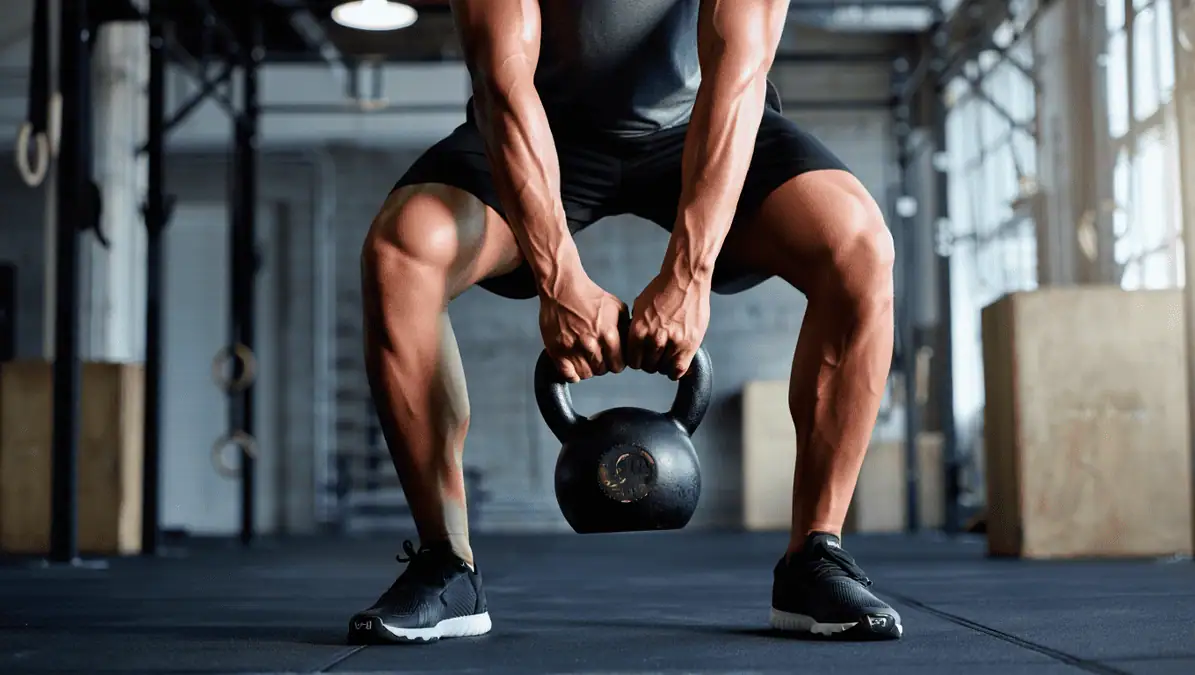

The difference between an average soccer player and a standout one is often just 0.2 seconds—that’s how fast elite players accelerate, win 50/50 balls, and create space.
In this article, I’ll show you how to train in the offseason to close that gap.
Who I Am & Why You Should Listen
My name is David Lawrence, owner of Michigan Elite Conditioning for Athletes (MECA). Over the past decade, we’ve coached more than 1,000 athletes across 30 different sports, helping them run faster, kick harder, and become more explosive.
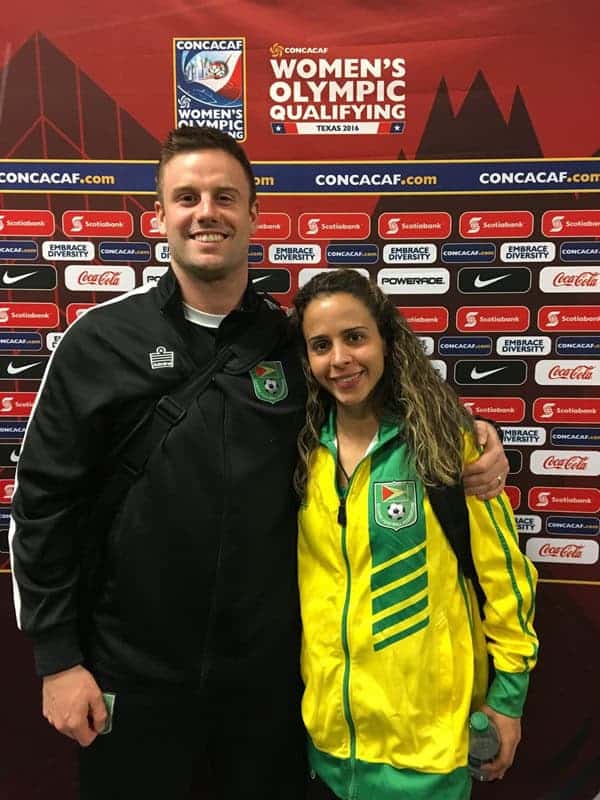
For years, I’ve worked with Olympic-level soccer players as the National Team Strength & Performance Coach for Guyana. During that time, our women’s team rose over 40 places in international rankings within 18 months, largely through improved strength, speed, and overall athleticism.
Today, I’m going to show you the exact offseason approach that helped make that possible—so you can give your athlete a massive advantage next season.
Why Most Soccer Players Don’t Improve Year to Year
Most athletes barely improve from one season to the next.
It’s not because they lack talent—
it’s because they’re missing the physical abilities required to apply their skills at a high level.
Soccer is a sport of:
- Acceleration
- Speed
- Strength
- Repeated explosiveness
- Rapid changes of direction
Yet these qualities are rarely trained correctly.
The #1 factor that determines whether a soccer player gets faster is something called relative strength—how strong you are compared to your bodyweight.
And here’s the good news:
Relative strength is extremely trainable… if you use the right approach.
The Biggest Mistake Soccer Players Make
Most players waste countless hours doing:
- Ladder drills
- Cone drills
- Generic “SAQ” footwork sessions
- Random speed workouts that don’t transfer to the field
These activities look athletic but do almost nothing to improve true game-speed.
Speed comes from one thing:
force production—your ability to put more force into the ground with each stride.
And force production comes from getting stronger.
Strength training:
- Makes you accelerate faster
- Improves overall speed
- Increases joint stability
- Reduces injuries
- Improves 50/50 ball dominance
- Enhances shooting power
- Helps maintain speed late in the game
It’s the cheat code… if done correctly.
Why Every Soccer Athlete Needs an Individualized Assessment
Parents often ask me:
“What should my son or daughter do to get faster?”
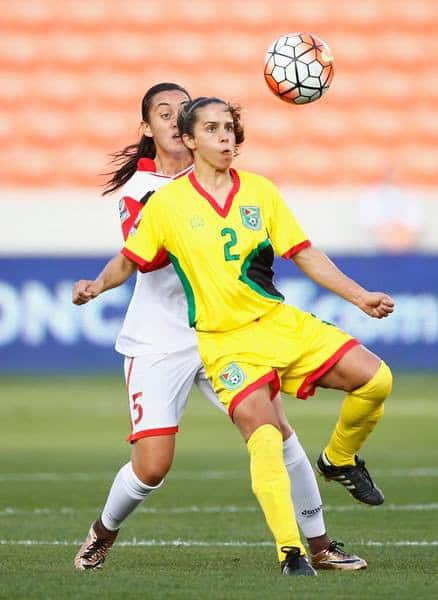
The truth is, every athlete is different:
- Limb length
- Hip structure
- Strength levels
- Flexibility
- Injury history
- Muscle imbalances
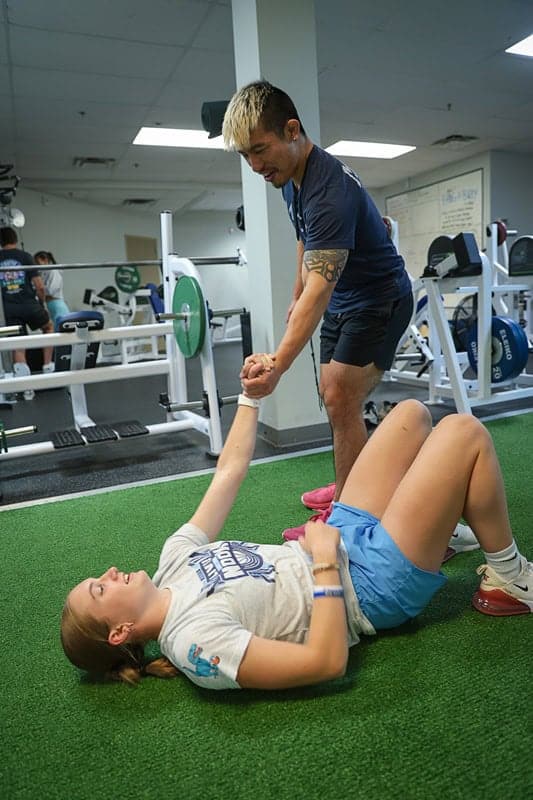
Because of this, the training must be individualized.
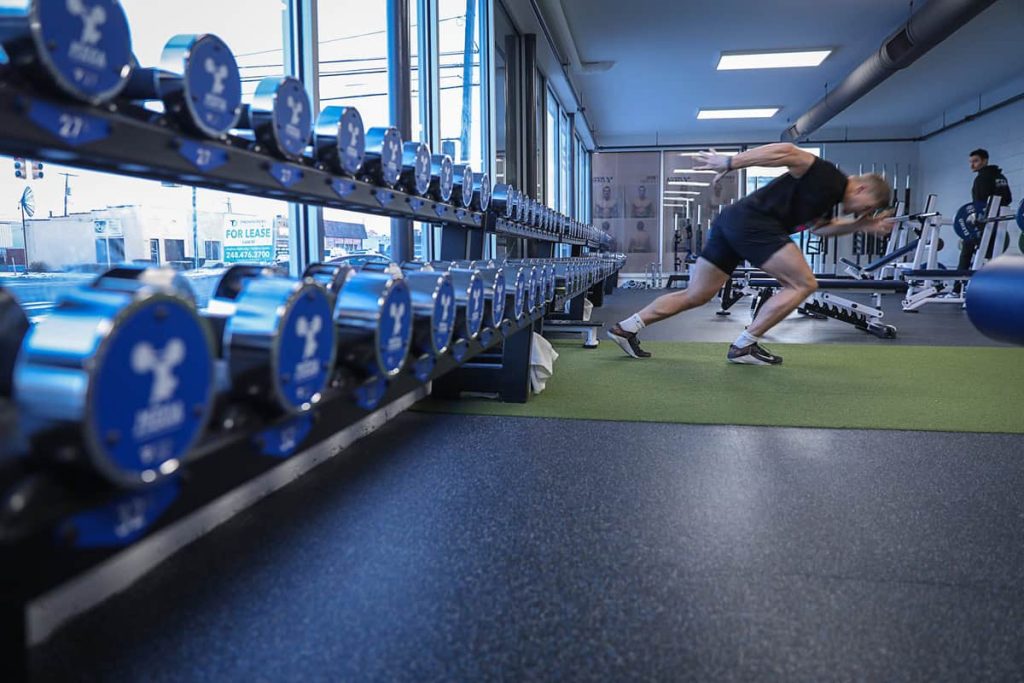
This is why I’m completely against large high-school weight-room groups with 15, 30, even 50 kids doing the same program. It’s unsafe and ineffective.
To improve safely and quickly, athletes need:
- A proper assessment
- A customized program
- A coach monitoring technique, load, and progression
Without these three things, training becomes random—and progress becomes luck.
Step 1: Structural Balance Training (The Game-Changer)
After an assessment, we start with a phase called structural balance. This is where we strengthen the weak links that are limiting speed and explosiveness.
For soccer players, two lower-body exercises are absolutely critical:
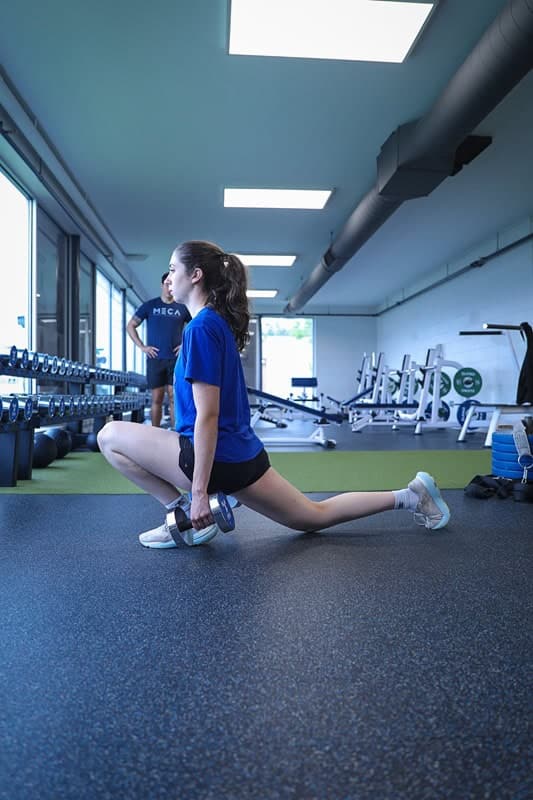
1. Full-Range Split Squat
This exercise:
- Improves acceleration
- Balances the right and left legs
- Reduces injury risk
- Improves stability during kicks and cuts
- Enhances shooting power
Soccer is a unilateral sport.
Players almost always have imbalances between sides.
Split squats restore balance quickly and dramatically boost speed.
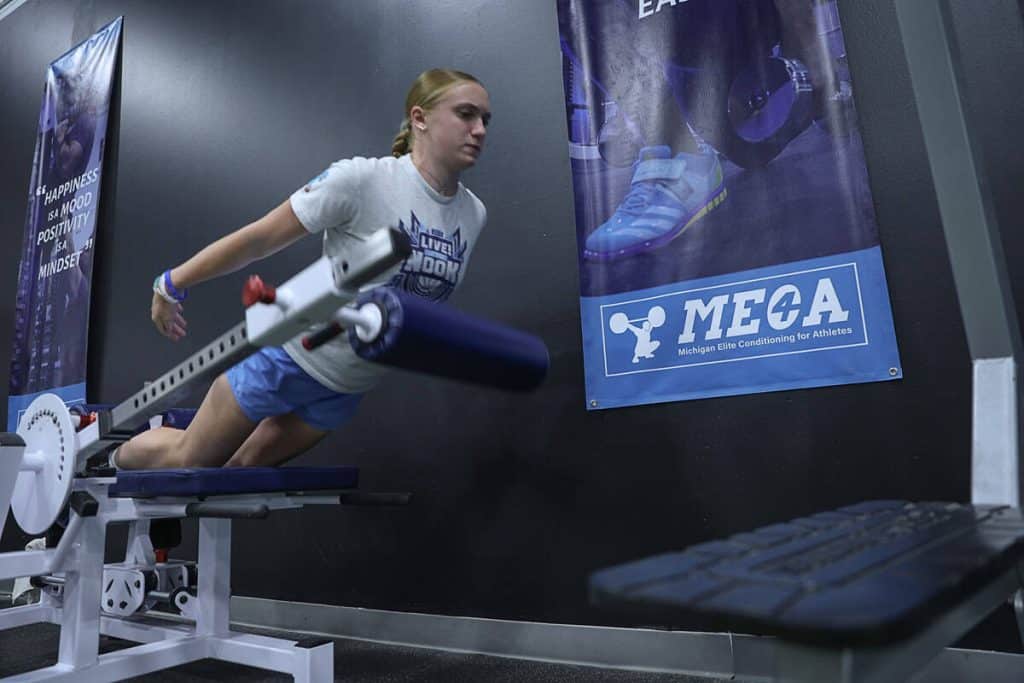
2. Knee Flexor Training (Hamstrings)
Most soccer players are extremely weak in the hamstrings.
But hamstrings control:
- Deceleration
- Changing direction
- Sprinting mechanics
- Knee stability
Weak hamstrings = decreased power + high injury risk.
We start with:
- Lying leg curls
- Back extensions
Then progress to:
- RDLs
- Nordics
Two key strength standards we aim for:
- 1 Nordic rep
- RDL of 1.25x bodyweight for 8 reps
When athletes hit these numbers, they’re dramatically faster and far more resilient.
Step 2: Hard Work (The Non-Negotiable)
Training that actually works is hard.
Strength training, when done properly, requires:
- Focus
- Effort
- Discipline
- Consistent overload
- Doing uncomfortable things
But it’s also incredibly rewarding.
Athletes see weekly progress—more strength, better speed, more confidence.
The harder challenge is what happens outside the gym:
- Nutrition
- Sleep
- Consistency
And this is where most soccer players fall apart.
The Nutrition Problem in Soccer
Soccer players—especially female athletes—are often the worst when it comes to nutrition.
On the Guyana National Team, before I arrived:
- Over 40% of the players had a Starbucks Frappuccino for breakfast
- Some only ate real food after 1–2 PM
This destroys performance.
Good nutrition is made up of two things:
1. Real, whole foods
Examples:
- Eggs
- Meat
- Fruit
- Avocado
- Rice
- Potatoes
2. Consistency
Not 2–3 days a week.
Not “when it’s convenient.”
Six to seven days a week.
When athletes dial in nutrition consistently, their performance skyrockets—especially already-skilled players.
What Happens When Players Train Properly
I’ve seen massive transformation firsthand.
With the Guyana National Team:
- Players got faster
- Conditioning improved
- Muscle mass increased
- Body fat dropped
- They won more 50/50s
- They controlled more of the game
This is exactly what happens with high-school and college athletes too.
The Bottom Line
Speed is the name of the game in soccer.
And the truth is:
You can make huge improvements in both speed and strength in under 12 weeks.
All it takes is:
- The right individualized approach
- Hard work
- Proper coaching
- Consistent nutrition
- Sufficient sleep
If you’re an athlete—or a parent—who wants real results, we’d love to help.
Visit mecastrong.com to Book a Soccer Training Assessment and start the process.