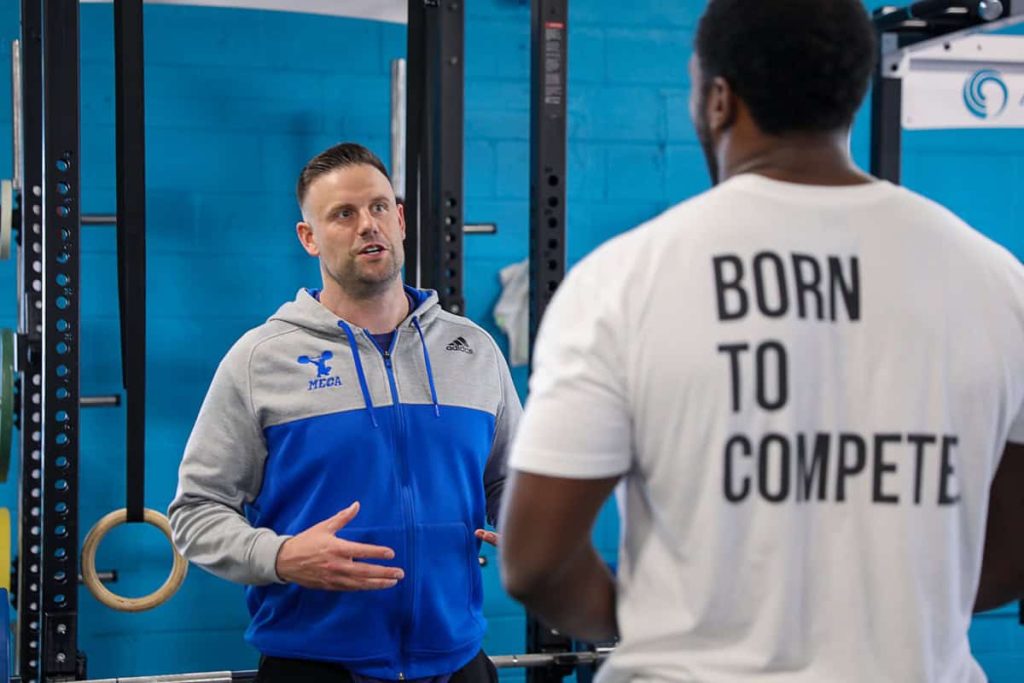
I’ve spent my entire career as a strength coach working with professional football players. Over the last 15 years, I’ve trained hundreds of NFL, college, and high school athletes, including 7 Super Bowl champions—Frank Zombo, Matthew Stafford, Charles Harris, Haloti Ngata, Eric Fisher, Mike Dana, and more—along with more than a dozen first-round draft picks.
Today, I want to show you exactly how I train NFL athletes and help them continue improving year after year.
Book a Football Training Session with David Lawrence
My Background: From Athlete to Coach
I played football at Central Michigan University and was part of two Mid-American Conference championship teams. I played under Brian Kelly—Notre Dame’s winningest coach—who is now at LSU, and Butch Jones, who later coached at Cincinnati and Tennessee.
After college, I wasn’t good enough to play in the NFL. But I loved the sport and wanted to help athletes achieve what I couldn’t. My first job was at the Poliquin Performance Center in Chicago, and what I saw there completely changed how I approached training.
Athletes were making faster progress in 3–4 months—in strength, speed, power, size, and body composition—than most players I knew made in 3–5 years. Even more impressive: they weren’t just performing better—they were healthier, more energetic, and recovering faster.
This was radically different from the “old school” grind-based model I grew up with. In college we were taught to suffer through fatigue, joint pain, and injury. Our strength coach literally said if we didn’t have shin splints before the season, we “weren’t running enough.”
It was a wild and very flawed mentality.
Since 2009, I’ve refined what I learned into a system that we use at MECA—the same system I use to train NFL athletes and teach our coaches.
Concept 1: Individualize Everything
Every NFL athlete has a superpower and a kryptonite.
Their superpower is the physical quality that put them in the NFL—it’s top-1% ability.
Examples of Superpowers
Eric Fisher
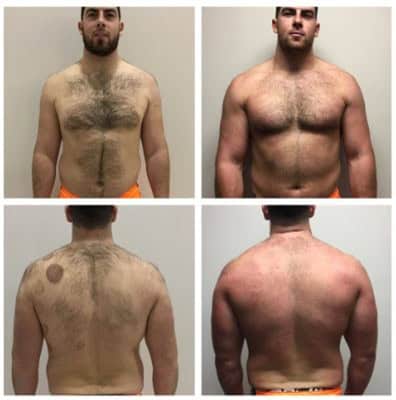
Eric Fisher, the 1st overall pick in 2013, was 6’8″, 315 lbs, and had freakish mobility. He could perform a perfect overhead squat with no ankle or posterior-chain deviation—almost unheard-of for his size.
Matthew Stafford
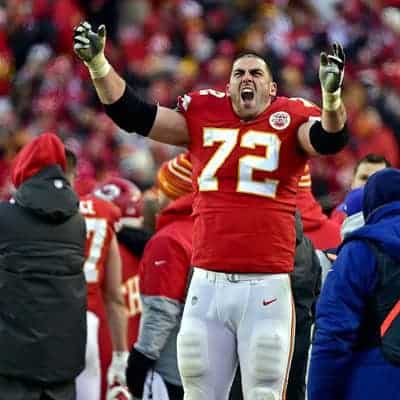
Matthew Stafford, entering his 17th+ NFL season, has one of the greatest arm talents I’ve ever seen. When I began training him, he understood shoulder mechanics at a level most coaches don’t. His combination of intelligence and physical ability is his superpower.

The Role of a Strength Coach: Protect the Kryptonite
Tall or long-limbed athletes produce huge force because of their lever length—but those same levers stress the joints more, increasing ACL, hamstring, and tendon injury risk.
A great strength coach must:
- Identify each athlete’s weak links
- Build programs that strengthen their vulnerabilities
- Support the structures that produce force
For long-limbed athletes, getting them stronger—especially in extended or end ranges—has the greatest performance payoff and dramatically reduces injury risk.
Concept 2: Turn Strength Into Power
Some NFL athletes come in extremely strong. For these players, the goal shifts to converting strength into power.
At MECA, we use a system called Isolate → Integrate → Accelerate:
1. Isolate
Build single-limb strength and fix structural imbalances.
Example:
- 1-arm dumbbell row
- Back extension
2. Integrate
Progress to compound movements that coordinate multiple joints.
Example:
- Chin-ups
- Deadlifts
3. Accelerate
Train velocity, speed, and explosiveness.
Example:
- Power snatch
- Power clean
Every athlete moves along this continuum based on what their body needs—not a cookie-cutter plan. If you want any athlete to improve fast—stronger, faster, higher jump—individualization is the single most important investment they can make.

Concept 3: Speed Training Must Match the Sport
Everyone wants to get faster, but most athletes are training the wrong way.
General SAQ (speed, agility, quickness) programs rarely carry over to actual sport performance.
Speed must match:
- Your position
- The distances you run
- The duration of each effort
- The mechanical demands of your sport
Football Speed ≠ Track Speed
Football sprint distances are usually 5–40 yards, which makes acceleration and strength far more important than elastic abilities.
Track training is great—for track.
It does not help a defensive end become football-faster.
My 4-Step Speed Analysis Process
1. Flexibility
This is the fastest way to get an athlete running faster—most coaches overlook it.
2. Structural Balance
Weakness at the knee = slower top-end speed (longer ground contact time)
Weakness at the hip/glutes/back = weaker acceleration
3. Body Composition
Carrying excess body fat creates:
- More inflammation
- Higher internal friction
- Extra weight that isn’t producing force
When athletes lose fat and build muscle, speed improves naturally—and so does conditioning.
4. Relative Strength
How strong is the athlete per pound of bodyweight?
Many NFL players are gifted enough to reach the league without ever truly getting strong. When we finally train them properly, their numbers explode.
Our average NFL athlete adds 50–60 lbs to their bench press in 14 weeks, even if that lift has been plateaued for years. The key is individualization—not a general template.
Lifestyle: The Secret Weapon Most Athletes Ignore
Training is only half the equation. Elite performance comes from doing the basics right—every single day.
The essentials:
- Sleep 9–10 hours per night in-season
- Eat breakfast daily
- Stay properly hydrated with water + electrolytes
The Power of Sleep
Marvin Jones (Detroit Lions)
During the season, he slept in a separate room to ensure optimal rest. He believed it was the best investment he could make in his career—and he performed like it, ranking among the top 10 WRs for years.
Nick Bellore (Seattle Seahawks)
On his 15th NFL season as an undrafted player, he credits longevity to consistent sleep—9 to 10 hours every night.
If I could get every young athlete to do one thing, it would be to improve their sleep habits. It fixes nearly everything.
Final Thoughts
This is how we train NFL athletes at MECA—and how we help them get stronger, faster, healthier, and more durable.
The formula is simple:
- Train the individual
- Fix weaknesses
- Build strength strategically
- Convert strength into power
- Match speed training to the sport
- Master sleep, nutrition, and hydration
This is how professional athletes continue to improve—and it’s available to anyone who has the desire to reach their potential.
If you enjoyed this or have questions, feel free to ask. I’m always happy to help.