
Most volleyball players eventually hit a plateau in their vertical jump, power, and overall performance—often while battling overuse injuries, nagging joint pain, and stiffness. What many athletes don’t realize is that improving vertical jump and hitting power is far simpler than they think.
My name is David Lawrence, founder of Michigan Elite Conditioning for Athletes (MECA). As a strength coach who has trained athletes in more than 30 sports, volleyball is one of the most impressive and explosive sports I’ve worked with—yet it’s also one of the most misunderstood when it comes to proper training.
In this article, I’m going to break down the steps volleyball players need to take to increase their vertical jump, boost power, reduce pain, and reach the next level. We’ll cover nutrition, sleep, flexibility, and the 7 most effective exercises I’ve found for high school and collegiate volleyball athletes.
The Hidden Problem in Volleyball: Overuse Injuries
Many volleyball injuries stem from repetitive, high-impact movements—especially constant jumping. Research backs this up. In one NIH study:
- 93% of college volleyball players reported pain in the knees, low back, or shoulder during the season.
- 79% reported knee pain.
- 71% experienced low back pain.
- 58% dealt with issues serious enough to reduce training or performance.
From my experience, one thing is certain: if you’re in pain, you cannot perform consistently, and you definitely won’t jump your highest.
Three Key Strategies to Reduce Pain & Improve Performance
1. Strength Training: The “Golden Ticket” to Jumping Higher
Individualized strength training not only boosts vertical jump and hitting power—it also protects you from the repetitive stress of the season.
The stronger you are relative to your bodyweight, the higher you can jump. Strong muscles also absorb more landing force, reducing stress on your joints.
2. Improving Flexibility Through Consistent Stretching
Tight muscles increase compressive forces on your knees and lower back. Adding a 15-minute flexibility routine can dramatically reduce pain, improve mobility, and enhance jump mechanics.
3. Optimizing Nutrition & Sleep
Many athletes—especially female athletes—undereat and lack the nutrients needed for recovery, muscle repair, and performance. A solid breakfast is essential. I recommend:
- High-protein foods: chicken, steak, eggs
- Fruit: apples, berries
- Healthy fats: nuts, avocado
Protein is especially important. For athletes who struggle to hit daily protein needs, essential amino acids or a high-quality protein powder can help. I personally like Spoken Nutrition’s protein powder, which includes 5g of added collagen for joint support.
Hydration also plays a major role in injury prevention. Dehydration impairs coordination and reduces the body’s ability to absorb shock—two factors that directly affect volleyball performance.
Finally, sleep is one of the most underrated performance boosters. Volleyball athletes should aim for 9–10 hours per night, especially during the season. Proper rest enhances recovery more than almost anything else.
The Top 7 Exercises for Increasing Vertical Jump & Reducing Pain
These exercises consistently create dramatic improvements in power, jump height, stability, and durability for volleyball players:
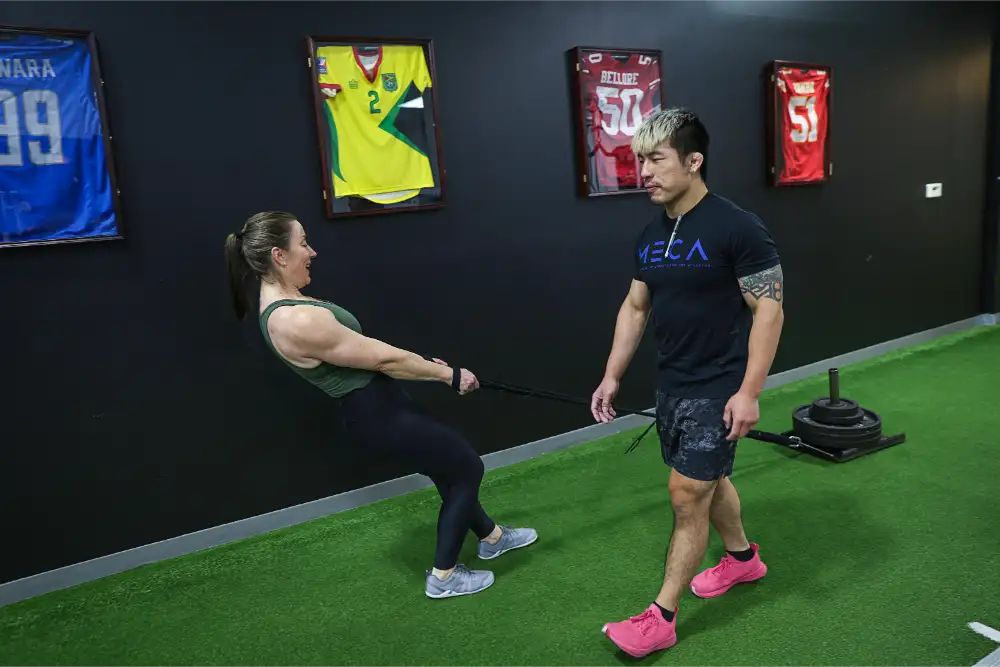
1. Backwards Sled Drag
Targets the VMO and strengthens the knees for pain-free jumping and landing.
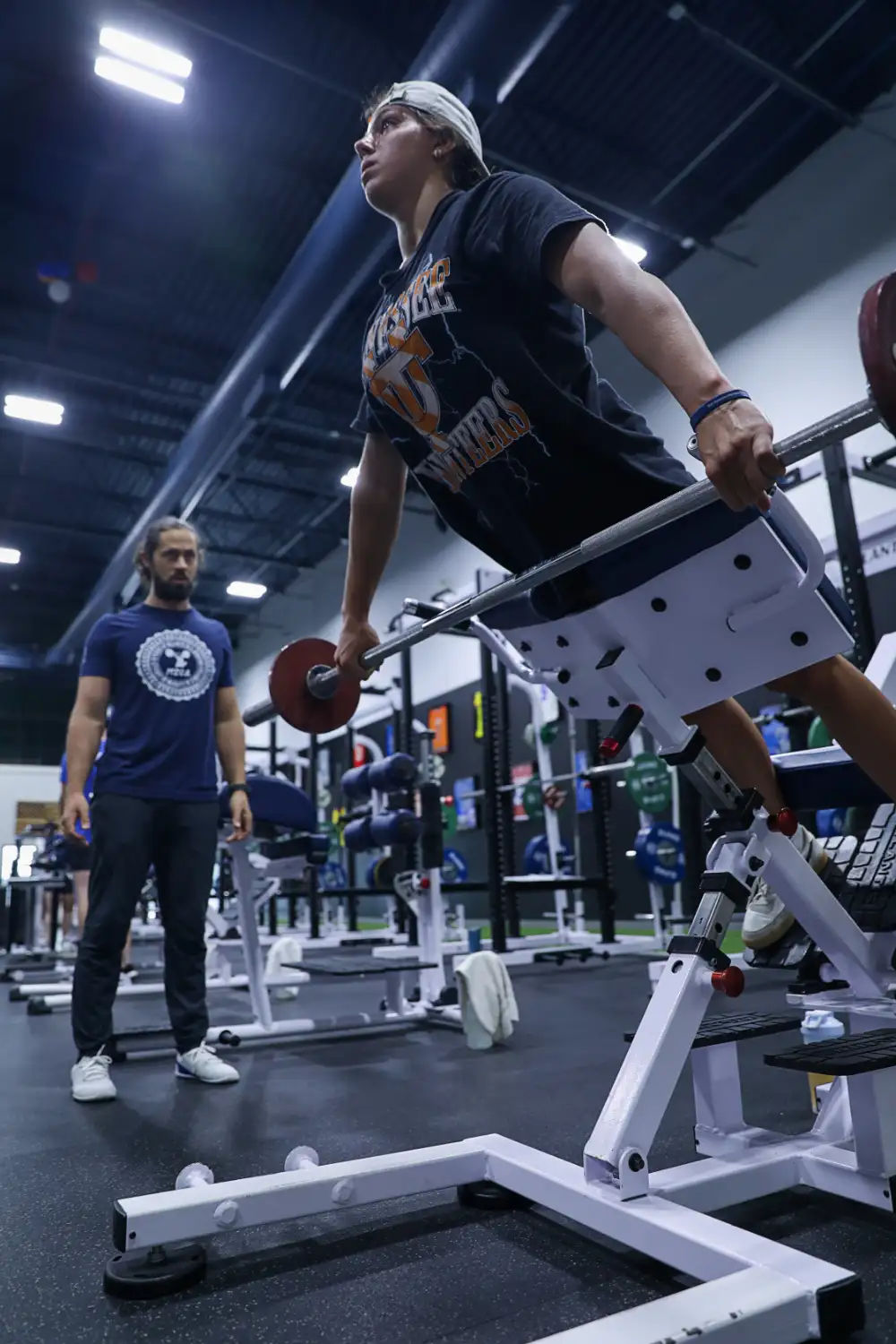
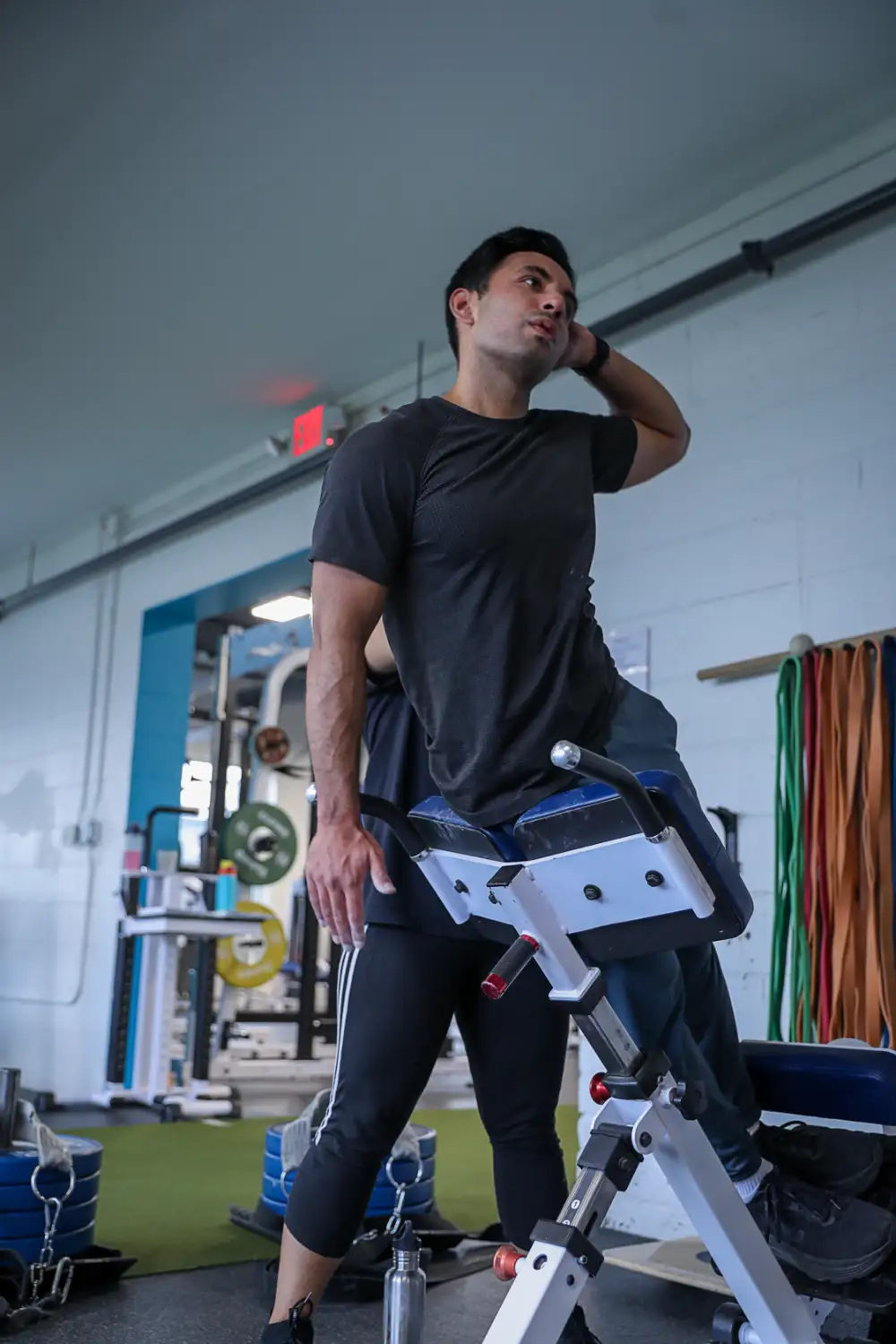
2. 45° Back Extension
Builds low-back strength—a key area for hitters and blockers.
3. QL Side Plank
Improves core stability and reduces low-back strain.
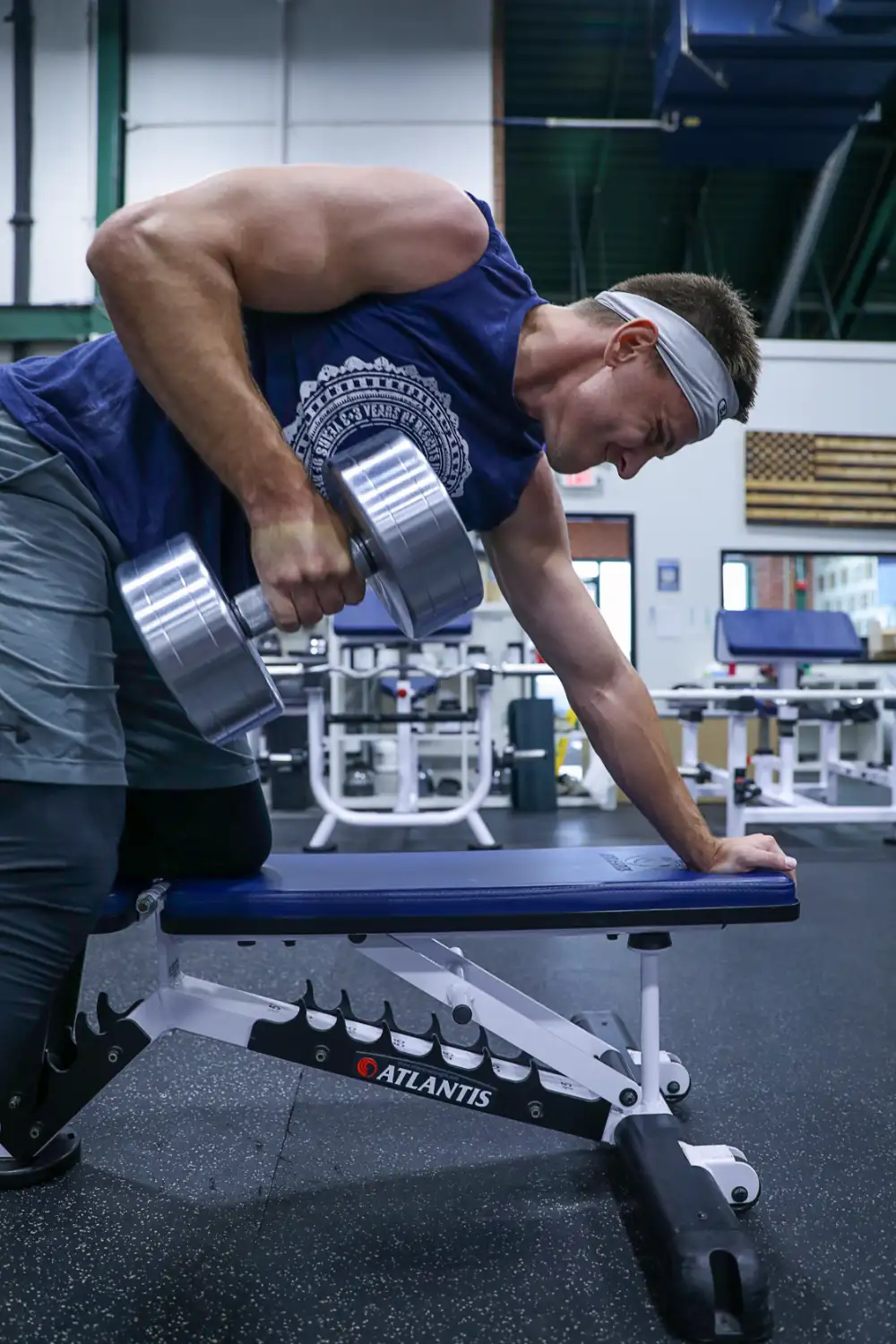
4. Single-Arm Dumbbell Row
Strengthens the upper back and shoulders for hitting power and shoulder stability.
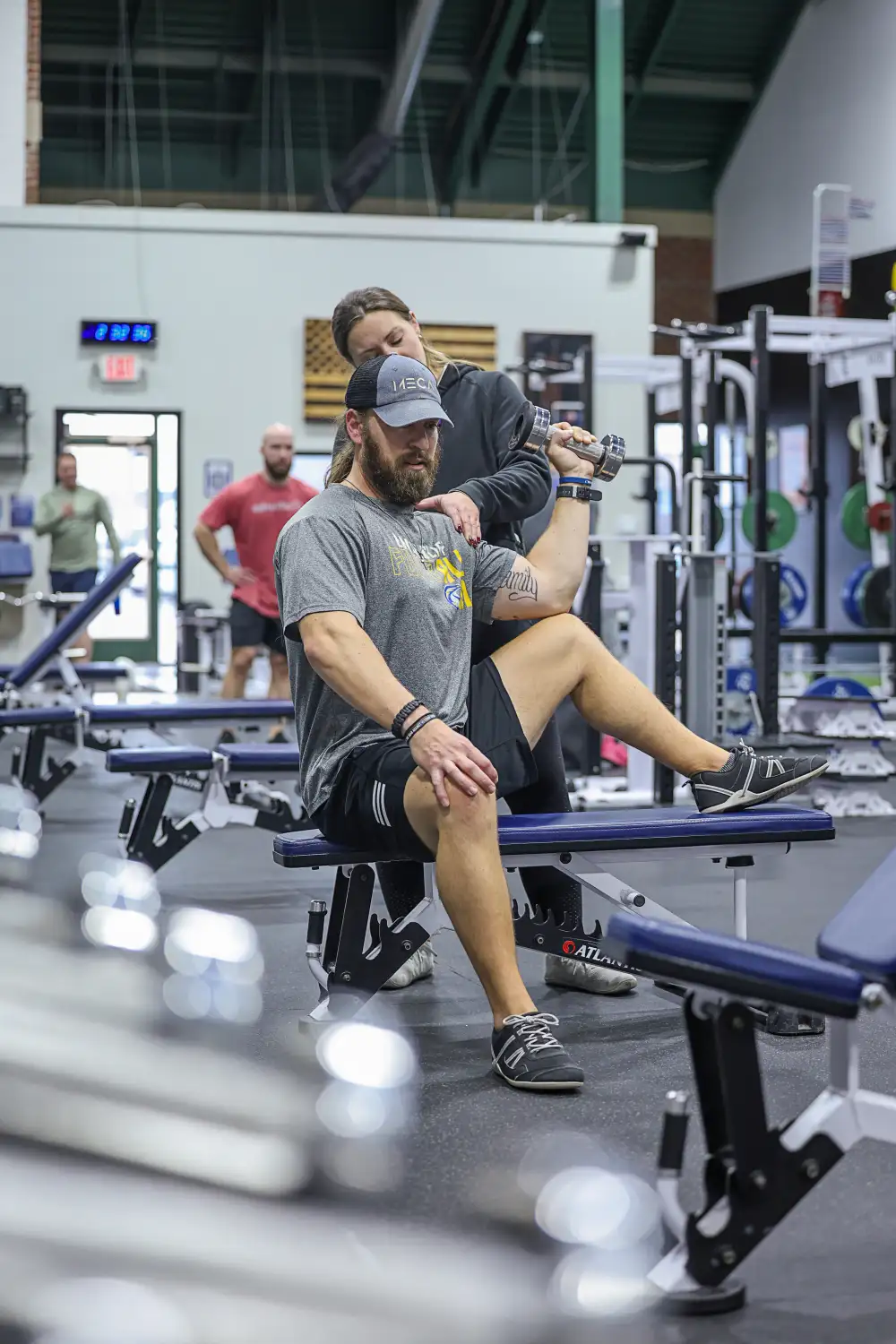
5. External Rotation on the Knee
Essential for shoulder health and injury prevention.
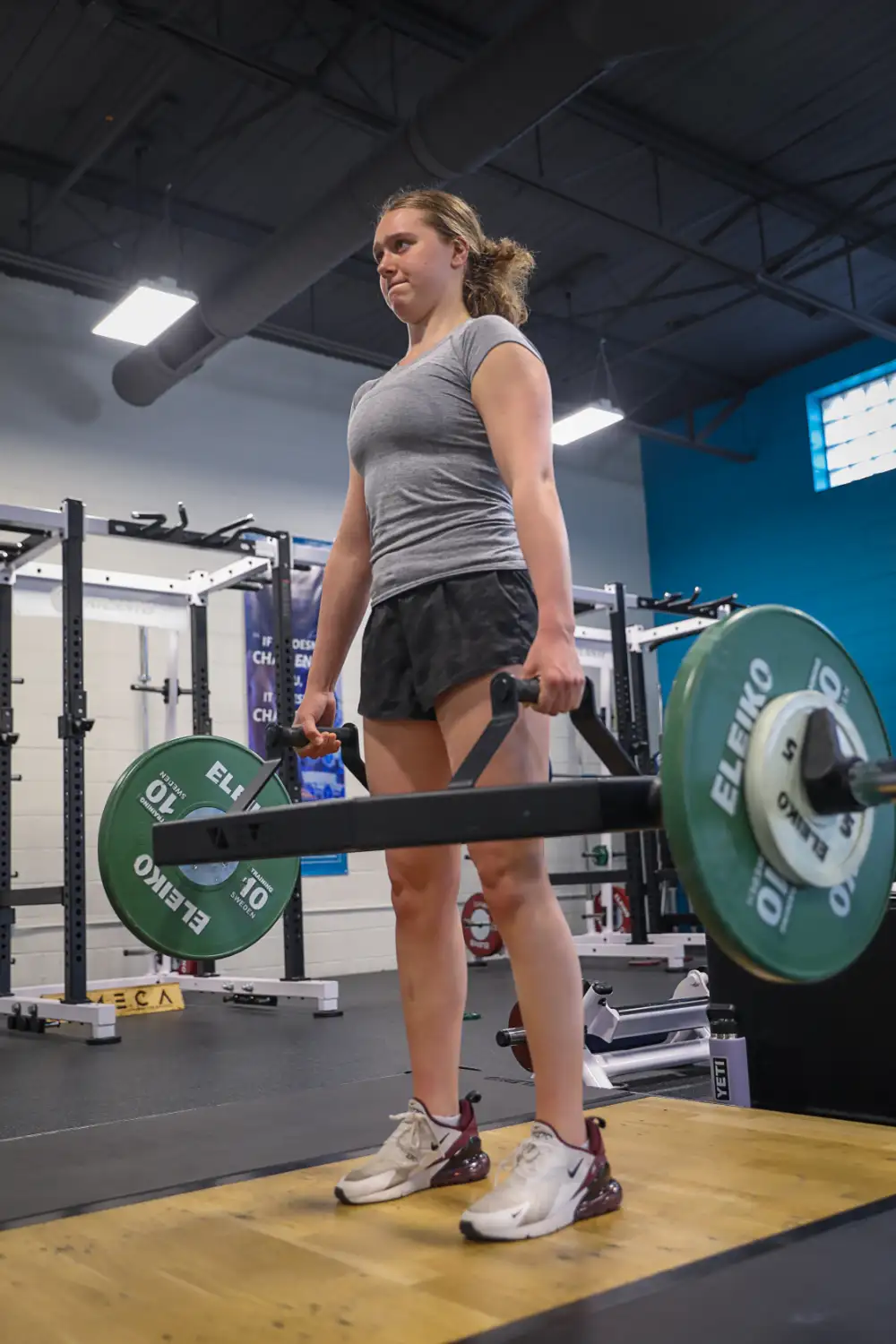
6. Trap Bar Deadlift
One of the best full-body power builders for vertical jumping.
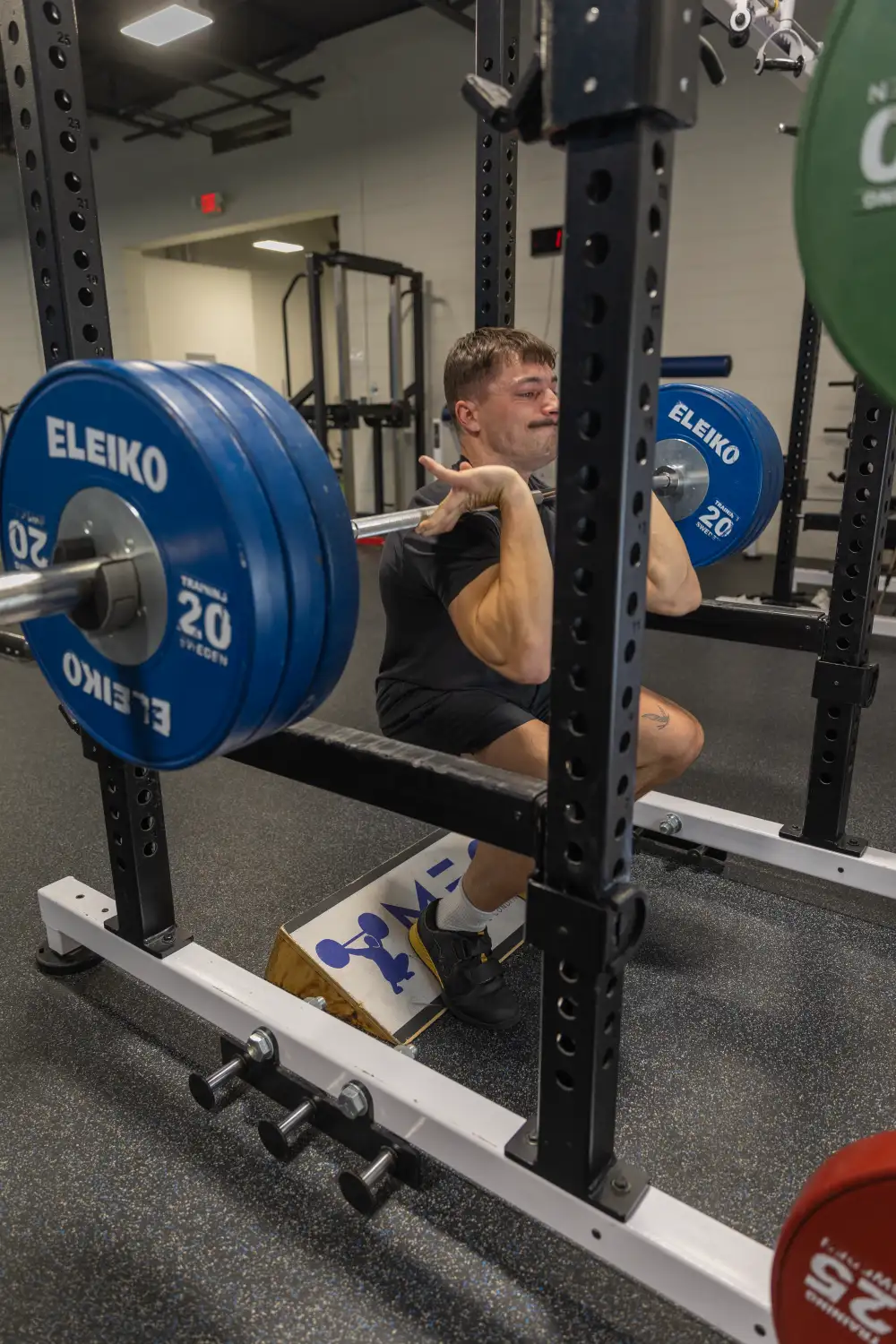
7. Front Squat
Develops quad strength, mobility, and explosive power for jumping.
Ready to Take Your Game to the Next Level?
If you found this helpful or want to take the next step, consider getting a Structural Balance Assessment at mecastrong.com. It’s a powerful starting point that shows exactly where you are now and gives you a personalized roadmap to reach your full athletic potential.
We’d love to help you improve your performance, jump higher, and play pain-free.