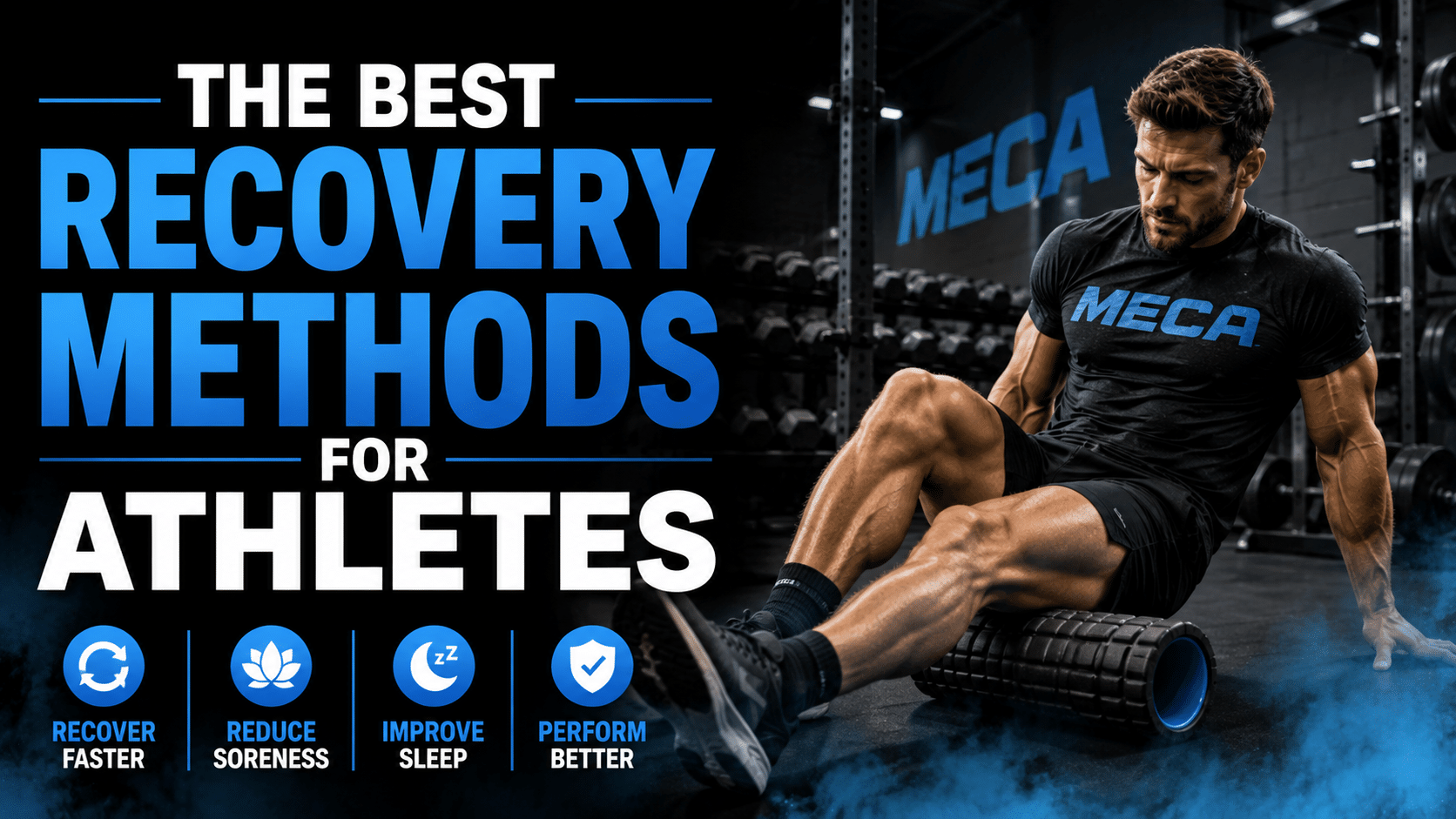

Training hard is important, but recovering well is what allows athletes to keep improving, stay healthy, and perform at their best. The best recovery methods for athletes are not complicated gimmicks. They are consistent habits that support the body’s ability to repair muscle, restore energy, improve mobility, and prepare for the next workout, practice, game, or competition. Whether an athlete is just beginning structured training or competing at a high level, recovery should be treated as an essential part of the performance plan.
At MECA, recovery is viewed as part of the complete training process. Founded in 2011 by strength and conditioning coach David Lawrence, we have built our approach around a clear mission: to elevate the level of health and sports performance in Michigan by providing superior training and coaching. That means helping athletes train with purpose, move better, get stronger, and understand what their bodies need outside of the weight room as well.
Athletes often focus on what they can do to push harder, lift more, run faster, or compete longer. Those goals matter, but progress happens when the body adapts to training. That adaptation happens during recovery. Without proper recovery, athletes may feel constantly sore, tired, stiff, or mentally drained. Over time, poor recovery can affect performance, increase injury risk, and make training feel more frustrating than productive.
The good news is that athletes can improve recovery with the right combination of sleep, nutrition, hydration, movement, mobility, smart programming, and coaching.
Why Recovery Matters for Athletic Performance
Recovery is the process that allows the body to return to a stronger, more prepared state after training or competition. When an athlete lifts, sprints, jumps, practices, or plays, the body experiences stress. That stress is not a bad thing when it is managed correctly. In fact, training stress is what signals the body to adapt.
However, the body needs time and resources to make those adaptations. Muscles need to repair. The nervous system needs to reset. Energy stores need to be replenished. Joints and connective tissues need support. The mind also needs a break from constant physical and competitive demands.
Good recovery can help athletes:
- Reduce excessive soreness
- Improve strength and power development
- Improve body composition
- Maintain better movement quality
- Support healthy joints and muscles
- Improve energy and focus
- Lower the risk of overtraining
- Build consistency in training
- Perform better in practices and competitions
Recovery does not mean doing nothing. It means using the right strategies at the right time to help the body respond well to training.
Here are some of the best recovery methods athletes can use to feel better, perform better, and keep building long-term success.
Sleep: The Foundation of Athletic Recovery
Sleep is one of the most powerful recovery tools available to athletes. During sleep, the body repairs tissue, regulates hormones, supports immune function, and restores the nervous system. For athletes, sleep is not just rest. It is performance preparation.
When athletes do not get enough quality sleep, they may experience slower reaction times, reduced coordination, lower motivation, poor decision-making, and increased soreness. Even a well-designed training program can be less effective if the athlete is consistently under-rested.
To improve sleep quality, athletes should focus on consistent habits:
- Go to bed and wake up at similar times each day
- Keep the bedroom cool, dark, and quiet
- Limit screen time before bed
- Create a relaxing nighttime routine
- Prioritize sleep during heavy training periods
Athletes should aim for 8-10 hours of sleep per night. Younger athletes, especially those balancing school, sports, homework, and social activities, may need extra support building healthy sleep routines. Adult clients may also struggle with sleep due to work stress, family responsibilities, or busy schedules. In both cases, better sleep can make a major difference in energy, recovery, and performance.
Nutrition for Muscle Repair and Energy Restoration
Food is fuel, but it is also a recovery tool. After training, the body needs nutrients to repair muscle tissue, replenish glycogen, and support overall health. Athletes who under-eat or rely heavily on low-quality foods may struggle to recover, even if they are working hard in training.
A strong recovery nutrition plan should include:
- Protein to support muscle repair
- Carbohydrates to replenish energy stores
- Healthy fats to support hormones and overall health
- Vitamins and minerals from fruits, vegetables and whole foods
- Enough total calories to match training demands
The best nutrition plan is one that the athlete can follow consistently. Recovery meals do not need to be complicated. They need to provide the body with what it needs to rebuild and prepare.
Hydration and Electrolytes
Hydration plays a major role in recovery and performance. Even mild dehydration can affect energy, focus, coordination, endurance, and muscle function. Athletes lose fluid through sweat during training and competition, and they also lose electrolytes such as sodium and potassium.
Water is usually the best starting point, but athletes who train hard, sweat heavily, or practice in warm conditions may need electrolytes as well. Hydration should happen throughout the day, not just during workouts.
Signs an athlete may need to improve hydration include:
- Frequent headaches
- Dark yellow urine
- Muscle cramping
- Low energy
- Dizziness
- Poor focus
- Feeling unusually sore or sluggish
A simple approach is to drink 0.6oz of water per lb. of bodyweight, then increase with activity. Athletes should also supplement with a high quality electrolyte like CWENCH that supports them without added sugars or chemicals. Athletes should also avoid relying too heavily on energy drinks or sugary beverages as their main hydration source.
Active Recovery and Light Movement
While rest is important, complete inactivity is not always the best way to recover. Active recovery uses low-intensity movement to increase circulation, reduce stiffness, and help the body feel better without adding significant stress.
Examples of active recovery include:
- Walking
- Easy cycling
- Light swimming
- Mobility circuits
- Stretching
Active recovery should feel refreshing, not exhausting. The goal is not to set records or add another hard workout. It is to help the body move, breathe, and loosen up.
For athletes who feel stiff the day after intense training or competition, light movement can often help more than sitting all day. This is especially helpful during tournament weekends, long competitive seasons, or heavy training blocks.
Mobility and Flexibility Work
Mobility helps athletes move through the ranges of motion they need for their sport and training. Flexibility refers to the ability of muscles to lengthen, while mobility includes strength, control, stability, and coordination through movement.
Good mobility can support better positions during lifting, sprinting, jumping, cutting, throwing, and changing direction. It can also help athletes feel less restricted and more confident in their movement.
Read more about mobiiltity and access our FREE stretching guides HERE.
Mobility work should be specific and intentional. Random stretching may feel good temporarily, but athletes often need a plan that matches their movement needs, sport demands, and training goals. This is where professional coaching can be especially valuable. A coach can identify limitations, teach proper movement, and help athletes improve mobility without wasting time.
Smart Training Loads and Planned Rest
One of the most overlooked recovery methods is proper program design. Athletes cannot recover well if every session is too intense, too long, or poorly planned. A smart program balances stress and recovery so the athlete can adapt over time.
Training should include appropriate progressions, exercise selection, volume, intensity, rest periods, and recovery days. This is especially important for athletes who are also practicing and competing outside the gym.
Without smart programming, athletes may stack too much stress at once. For example, an athlete might have a hard team practice, a demanding lifting session, poor sleep, and a tournament all in the same week. If that stress is not managed, performance can suffer.
Good coaching helps athletes understand when to push, when to adjust, and when to recover. At MECA, this begins with our Initial Assessment. The Initial Assessment helps provide direction so training can be matched to the athlete’s needs, goals, movement quality, and current ability level.
Managing Stress and Mental Recovery
Athletes are not only recovering physically. They are also recovering mentally. Competition, pressure, school, work, travel, and personal responsibilities can all affect recovery. When stress is high, the body may have a harder time adapting to training.
Mental recovery strategies can include:
- Deep breathing
- Journaling
- Quiet time away from screens
- Time outdoors
- Positive self-talk
- Healthy routines
- Talking with a coach, parent, or trusted support person
Athletes who feel mentally refreshed are often better prepared to train with focus and compete with confidence. Mental recovery does not mean ignoring goals. It means creating enough balance so the athlete can keep pursuing those goals with energy and purpose.
Listening to the Body Without Guessing
Athletes should learn to pay attention to how they feel, but they should also avoid guessing their way through training. Soreness, fatigue, poor sleep, irritability, reduced performance, and nagging discomfort can all be signals that recovery needs attention.
Important signs to monitor include:
- Persistent soreness that does not improve
- A noticeable drop in performance
- Trouble sleeping
- Loss of motivation
- Increased aches and pains
- Feeling unusually tired
- Difficulty focusing during training
- Getting sick more often than usual
These signs do not always mean an athlete needs to stop training completely. Sometimes the solution is adjusting intensity, improving nutrition, adding sleep, changing exercise selection, or building in more recovery work. A qualified coach can help athletes and clients make those decisions wisely.
Recovery for Youth Athletes
MECA trains athletes and clients from 11 years old and older, and recovery is especially important for developing athletes. Youth athletes are often balancing multiple sports, school, growth, travel teams, and busy schedules. Their bodies are still developing, which makes proper recovery and coaching even more important.
For youth athletes, recovery should focus on:
- Consistent sleep
- Enough food to support growth and training
- Good hydration habits
- Proper movement technique
- Age-appropriate strength training
- Rest from repetitive sport stress
- Encouragement and confidence-building
Young athletes should not be treated like smaller versions of adults. They need coaching that respects their stage of development, teaches fundamentals, and helps them build long-term athletic skills. When recovery is part of the process early, athletes can develop healthier habits that support them for years.
Building a Recovery Routine That Works
The best recovery routine is the one an athlete can actually follow. It does not need to be extreme or complicated. In fact, simple routines often work best because they are easier to repeat.
Consistency matters more than perfection. An athlete who gets the basics right most of the time will usually recover better than someone who occasionally uses advanced recovery tools but ignores sleep, food, and hydration.
FAQ
How often should athletes take rest days?
Most athletes benefit from one to two rest or lower-intensity days each week, but the right amount depends on age, sport, training schedule, competition demands, and recovery status.
Is soreness a sign of a good workout?
Not always. Soreness is normal, especially after new or challenging training, but extreme or constant soreness can be a sign that recovery, programming, or technique needs attention.
What should athletes eat after a workout?
Athletes should aim for a protein shake following training. Or a meal/snack that includes protein and fluids.
How much sleep do athletes need?
Many athletes need 8 to 10 hours of sleep, especially during hard training or competition seasons. Younger athletes may need even more depending on their age, growth, and activity level.
Can stretching prevent injuries?
Stretching alone cannot guarantee injury prevention. A complete approach should include strength training, mobility, proper technique, smart programming, recovery, and sport-specific preparation.
What is the best recovery method overall?
Sleep is often the most important recovery method, but the best results come from combining sleep, nutrition, hydration, movement, mobility, and quality coaching.
How can I tell if my athlete is not recovering well?
Warning signs can include constant fatigue, poor performance, mood changes, ongoing soreness, trouble sleeping, frequent aches, or lack of motivation. These signs should be addressed early.
Take Recovery as Seriously as Training
Great athletes do not only work hard. They recover with purpose. The right recovery plan can help athletes feel better, move better, train more consistently, and perform with greater confidence. From sleep and nutrition to mobility, hydration, active recovery, and smart coaching, every piece matters.
We are here to help athletes and clients build the habits, strength, movement quality, and confidence they need to succeed. Since 2011, we have been committed to elevating health and sports performance in Michigan through superior training and coaching. If you are ready to take your performance seriously, start with our Initial Assessment and discover a training approach built around your goals, your body, and your long-term development.
Contact us today to learn more and take the next step with us at MECA.