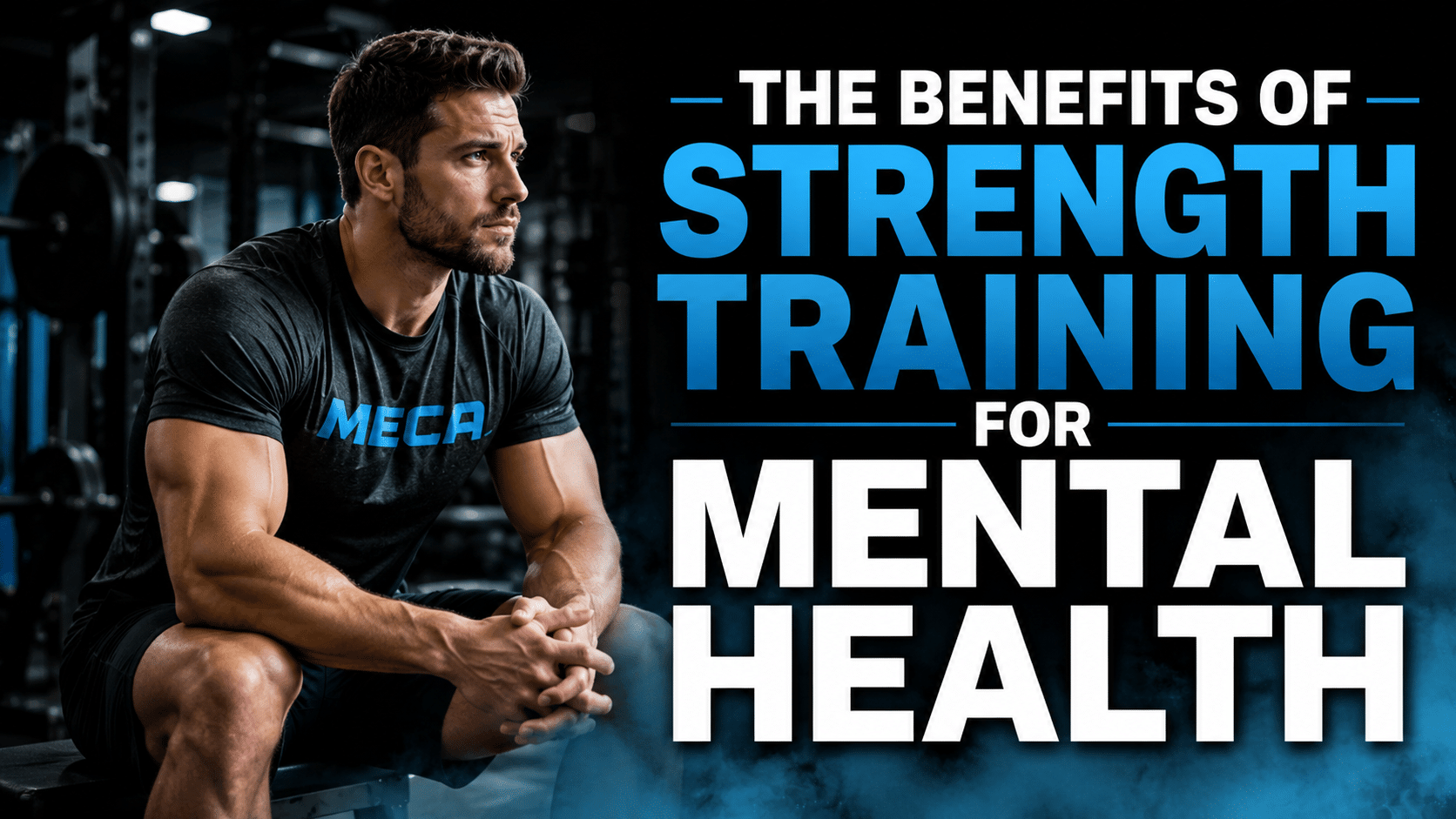
Strength training is often associated with building muscle, improving athletic performance, and becoming physically stronger. However, the benefits can reach well beyond the weight room. A consistent program of strength training for mental health can provide structure, build confidence, create a productive outlet for stress, and help people feel more capable in their daily lives. At MECA, we see strength as more than a physical quality. It is also the ability to approach challenges with greater focus, resilience, and belief in what you can accomplish.
The Connection Between Physical and Mental Strength
The mind and body do not operate independently. Physical activity can affect how we think, feel, sleep, and respond to stressful situations. According to the Centers for Disease Control and Prevention, regular physical activity can support emotional balance, improve cognitive functions such as thinking and problem-solving, and reduce symptoms associated with anxiety and depression.
Strength training is one form of physical activity that offers a distinct combination of physical effort and mental engagement. Every exercise requires some level of concentration, coordination, and controlled execution. A client must pay attention to posture, breathing, technique, tempo, and the instructions provided by the coach.
This focused environment can give the mind a break from everyday distractions. Instead of thinking about a long list of responsibilities, the client can concentrate on completing the movement in front of them. Over time, that practice may make it easier to remain present and composed in other demanding situations.
Strength Training Can Provide a Healthy Outlet for Stress
Stress is a normal part of life, but it can become difficult to manage when it builds up without a productive outlet. School responsibilities, work demands, athletic expectations, family obligations, and social pressures can all contribute to mental fatigue.
A structured strength training session gives people an opportunity to direct their energy toward a clear and constructive task. Lifting, pushing, pulling, carrying, jumping, and moving with purpose can create a sense of release. The workout does not make every problem disappear, but it can provide valuable space between the individual and the stressor.
Training can also create a transition point in the day. A student may use a session to reset after school. An athlete may use it to shift attention away from competition pressure. An adult may use training to decompress after work and return home feeling more focused.
Some of the stress-management benefits of strength training may include:
- Time away from screens and digital distractions
- A constructive outlet for physical and emotional energy
- Greater awareness of breathing and body position
- A clear task that encourages present-moment focus
- A sense of accomplishment at the end of the session
- A more consistent routine during busy or demanding periods
Progress Builds Confidence
One of the most meaningful benefits of strength training is that progress can often be observed in practical ways. A client may perform an exercise with better technique, complete another repetition, use a slightly heavier resistance, or move with greater control.
These improvements provide evidence that effort can lead to growth. That lesson matters inside and outside the gym. When people regularly experience themselves learning, adapting, and improving, they may begin to approach other challenges with greater confidence.
This is especially valuable for young athletes who are still developing their sense of identity and capability. Learning to perform a new movement safely can create genuine pride. It helps athletes understand that confidence does not have to come from being perfect or outperforming someone else. Confidence can come from preparation, consistency, and recognizing personal progress.
Adults can experience a similar shift. Becoming stronger may make everyday activities feel more manageable, from carrying groceries to climbing stairs or participating in recreational activities. That increased physical capability can support a broader sense of independence and self-trust.
Training Creates Structure and Consistency
Mental well-being can be supported by routines that give the week greater structure. Strength training provides a scheduled activity with a clear beginning, middle, and end. Clients arrive with a purpose, follow an organized program, and finish knowing they completed something positive for themselves.
Consistency can be particularly helpful during periods when other parts of life feel unpredictable. The training environment becomes a dependable place where expectations are clear, and progress is approached one step at a time.
A well-designed program also removes some of the uncertainty that can make exercise overwhelming. Instead of entering a crowded gym without knowing what to do, a coached client has a plan. Exercises, resistance levels, repetitions, rest periods, and technique expectations are selected with intention.
At MECA, the process begins with our Initial Assessment. This allows us to learn about the client, evaluate their starting point, and better understand their needs. From there, training can be organized around the individual instead of relying on a generic workout.
Strength Training Encourages Goal Setting
Strength training naturally introduces people to the process of setting and pursuing goals. Some goals may be performance-based, such as becoming faster, stronger, or more powerful. Others may focus on movement quality, consistency, energy, or general health.
Effective goals are not limited to major outcomes. Smaller milestones are often just as important. A client may work toward:
- Learning proper squat technique
- Improving balance and coordination
- Completing a full training week
- Increasing resistance without sacrificing form
- Becoming more confident with unfamiliar exercises
- Returning to consistent activity after time away
- Preparing physically for an upcoming sports season
These goals create direction. They also teach patience because physical development does not happen all at once. Clients learn to focus on the work they can complete today while understanding that meaningful progress is built over time.
That mindset can transfer to academics, careers, athletics, and personal responsibilities. A difficult objective becomes less intimidating when it can be divided into smaller, manageable actions.
Exercise May Support Better Sleep
Sleep affects concentration, emotional regulation, recovery, and overall quality of life. When sleep is inconsistent, everyday challenges can feel more difficult. Regular physical activity can support better sleep, although individual responses and training times may vary.
Strength training gives the body a reason to recover. A properly managed session creates physical demand without turning every workout into an exhausting test. When training volume, intensity, nutrition, hydration, and recovery are balanced, clients may find it easier to settle into healthier daily routines.
Training can also indirectly support sleep by creating consistency. Clients may become more intentional about meal timing, hydration, screen use, and bedtime because they want to feel prepared for their next session.
However, more exercise is not always better. Excessive training, insufficient recovery, or repeatedly exercising at an inappropriate intensity can interfere with sleep and increase fatigue. This is one reason individualized coaching and responsible program design are so important.
Strength Training Develops Resilience
Every person encounters moments when something feels difficult. Strength training provides a controlled environment for practicing how to respond to discomfort, frustration, and setbacks.
A challenging set requires effort, but it also requires decision-making. The client must maintain technique, listen to coaching, regulate breathing, and determine whether the movement can be completed safely. This teaches that difficulty can be approached thoughtfully rather than impulsively.
Not every workout will feel exceptional. Some days, energy may be lower or a movement may require additional practice. A supportive coach can help the client understand that one difficult session does not erase previous progress.
This process helps build resilience. Clients learn that setbacks can provide information rather than define their abilities. They can adjust, continue practicing, and return to the task with a better strategy.
Coaching Can Reduce Gym Anxiety
For someone who is new to strength training, entering a gym can feel intimidating. The equipment may be unfamiliar, the exercises may look complicated, and the individual may worry about being judged.
Professional coaching can make the experience more approachable. A knowledgeable coach explains what to do, why it matters, and how to perform each movement safely. This guidance allows clients to focus on learning rather than comparing themselves to everyone around them.
An encouraging training environment also reinforces that every person begins somewhere. No one needs to arrive already knowing how to lift. Strength is developed through instruction, practice, and consistency.
At MECA, we train athletes and clients from 11 years old and older. We understand that every person brings a different background, comfort level, training history, and set of goals. Our role is to meet clients where they are and help them move forward with a clear plan.
Strength Training Supports Focus and Mental Engagement
Strength training is not a passive activity. It requires clients to process instructions, control their movements, and respond to feedback. Compound exercises may involve several joints and muscle groups working together, which makes concentration especially important.
During training, clients may need to think about:
- Foot position
- Grip
- Posture
- Bracing
- Breathing
- Range of motion
- Movement speed
- Balance and coordination
This mental engagement can help clients become more aware of how they move. It may also strengthen the habit of paying attention to details, accepting feedback, and making real-time adjustments.
For athletes, this can support the ability to follow coaching cues and remain focused during practice or competition. For non-athletes, it can improve confidence when learning new physical tasks.
A Supportive Environment Can Strengthen Connection
Mental health is also influenced by social connection. Although strength training can be highly individualized, clients do not have to go through the process alone.
Working with a coach provides accountability and encouragement. The coach notices progress, helps address challenges, and creates realistic expectations. This relationship can make it easier for clients to remain consistent, particularly when motivation changes.
A positive training facility can also create a sense of belonging. Clients are surrounded by other people who are working toward their own goals. Even when programs differ, everyone shares an interest in improvement.
At MECA, we aim to create an environment where clients feel seen, supported, and challenged appropriately. We believe effective coaching requires technical knowledge, careful observation, honest communication, and genuine care for the person completing the program.
Strength Training Is Not a Replacement for Mental Health Care
Strength training can be a valuable part of a healthy lifestyle, but it is not a substitute for professional mental health treatment. Depression, anxiety, trauma, eating disorders, and other mental health concerns may require support from qualified healthcare professionals.
Exercise may complement a broader care plan when recommended appropriately. Research has found that physical activity, including strength training, may help reduce symptoms of depression and anxiety, but individual needs and responses vary.
Anyone experiencing persistent sadness, intense anxiety, significant changes in sleep or appetite, thoughts of self-harm, or difficulty functioning in daily life needs to seek help from an appropriate healthcare provider. Training professionals and mental health professionals serve different roles, and both can contribute to a person’s overall well-being.
How to Begin Strength Training Safely
The most effective starting point is not the heaviest weight or the hardest workout. It is a program that matches the individual’s current abilities, experience, and goals.
At MECA, every new client begins with our Initial Assessment. This process helps us gather useful information and establish an appropriate starting point. We can then coach the movements, monitor the client’s response, and make adjustments as needed.
Beginners can benefit from focusing on a few core principles:
- Learn technique before increasing resistance
- Follow a program instead of choosing random exercises
- Increase difficulty gradually
- Allow adequate time for recovery
- Communicate discomfort, pain, or unusual fatigue
- Prioritize consistency over extreme effort
- Work with a qualified coach when possible
A good strength program is challenging, but it is also manageable. Clients need to leave sessions feeling that they worked with purpose, learned something useful, and can return ready to continue progressing.
Frequently Asked Questions
Can strength training reduce stress?
Strength training may help people manage stress by providing physical activity, focused time, and a constructive outlet for energy. Individual results vary, and exercise does not eliminate the source of stress.
Can lifting weights help with anxiety?
Research suggests resistance training may help reduce anxiety symptoms for some people. It needs to be viewed as one possible component of overall wellness rather than a replacement for professional care.
How often do I need to strength train?
The ideal schedule depends on age, experience, goals, recovery, and overall health. A coach can determine an appropriate frequency and adjust it as the client progresses.
Is strength training appropriate for teenagers?
Strength training can be appropriate for young people when exercises are age-appropriate, properly supervised, and coached with an emphasis on technique. MECA works with athletes and clients ages 11 and older.
Do I need previous lifting experience to begin at MECA?
No. We work with different experience levels and begin with our Initial Assessment to establish an appropriate starting point.
Can strength training improve confidence?
It can. Learning new exercises, becoming physically stronger, and seeing measurable progress can help clients develop greater confidence in their abilities.
Is every workout supposed to be difficult?
Every workout needs a clear purpose, but it does not need to be exhausting. Effective programs balance challenge, technique, progression, and recovery.
Can strength training replace therapy or medication?
No. Strength training is not a replacement for therapy, medication, or medical care. Questions about mental health treatment need to be discussed with a qualified healthcare professional.
Build Physical and Mental Strength With MECA
We were founded in 2011 by strength and conditioning coach David Lawrence with a mission to elevate health and sports performance throughout Michigan through superior training and coaching. We work with athletes and clients ages 11 and older, creating purposeful programs that support strength, movement, performance, confidence, and long-term development.
Your experience begins with our Initial Assessment, which helps us understand your starting point and determine the most appropriate path forward. From there, our coaches provide knowledgeable instruction, thoughtful progression, and the accountability needed to train consistently.
Whether you are preparing for competition, building a healthier routine, or looking for a positive way to challenge yourself, we are ready to help. Contact us today to schedule your Initial Assessment and begin building strength that supports both your body and mind.